Why emergency information cards fail — and what to do instead
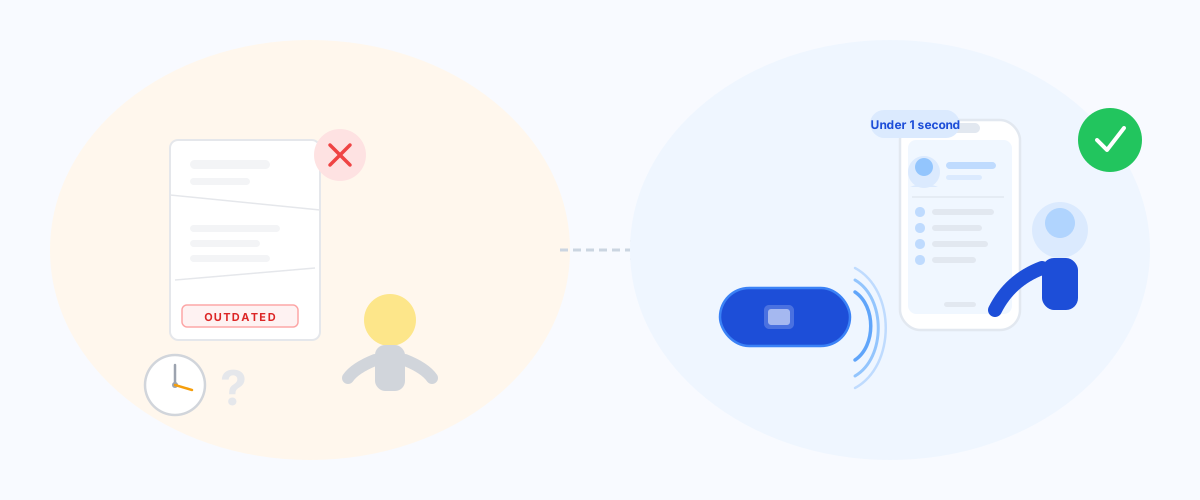
The laminated card tucked into a school bag. The lanyard with an emergency contact number. The printed sheet filed with the classroom assistant's notes. Every school, care home, and family caring for a vulnerable person has some version of this system.
It makes sense in principle. The information exists. The goal is to get it to whoever needs it, when they need it. The problem is that the delivery method consistently fails at the moment it matters most.
The card isn't there
The most common problem with physical information cards is simple: the card isn't on the person when it's needed. School bags get left at home. Lanyards get removed during PE. Wristbands get taken off at bedtime and not put back on. Laminated sheets live in a folder on a teacher's desk, not in the child's pocket when they're out on a trip.
When a non-verbal child with autism becomes separated in a shopping centre, or a care home resident has a fall while out with a member of staff they don't usually work with, the information that should help is rarely where it needs to be.
The card is out of date
Emergency contacts change. Medical conditions are diagnosed, managed differently, or change over time. Communication strategies that worked last year may not work now. Medications are adjusted.
Paper-based systems require someone to proactively update them, print new versions, distribute them, and ensure the old ones are destroyed. In a busy school or care setting, this process slips. The version in circulation often reflects what was true six months ago — or longer.
The card doesn't control who reads it
A laminated card has no concept of authorisation. Anyone who finds it can read it. Occasionally this is useful: a member of the public who finds a lost child can see an emergency contact number. But it also means that sensitive medical information, communication strategies, and detailed care instructions are readable by anyone, at any time, with no record of who has seen them.
For organisations with data protection responsibilities, this is a compliance issue. For families, it is a real concern about who has access to private information about their child.
The database is too slow
Some schools and care organisations have moved beyond paper. Information lives in a case management system or a shared drive. The record is there — but accessing it in an emergency requires a logged-in computer, knowledge of where the file is stored, and often the right member of staff to be reachable.
A support worker who encounters a distressed, non-communicative resident while out on a community trip cannot pull up their profile on the shared drive during the twenty seconds that matter.
What the card was trying to do
Every one of these systems is attempting the same thing: put the right information in front of the right person at the right moment. The intention is correct. The delivery mechanism fails under real conditions.
The information needs to be on the person, not in a bag or filing cabinet. It needs to reflect today's situation, not last year's. It needs to reach the right people in seconds. And it needs to be protected — accessible to authorised professionals, but no one else.
NFC tags solve the delivery problem
A waterproof NFC wristband worn on the wrist is always present. When an authorised professional taps their phone against it, a profile loads in under a second: emergency contacts, medical information, communication needs, care instructions. No login, no searching, no waiting for someone to answer a phone.
The profile is stored in the cloud, so a change made this morning is reflected the next time the tag is scanned. Access is controlled — only people the profile owner has authorised can read it. Every scan is logged with a name, timestamp, location, and organisation.
The information still needs to be accurate and kept up to date. But the delivery problem — getting the right information to the right person at the right moment — is solved.
Try SentinelTag
Set up your first emergency profile in minutes. Available now for Android.